What is the Normal Prostate Size?
Most men hear that the prostate is “about the size of a walnut.” That helps as a metaphor, but you deserve real numbers. Doctors use grams or milliliters to describe prostate size, and those values change with age.
This guide shows the numbers, explains how doctors measure them, and cites the key studies so you can trust the facts.
How do doctors measure prostate size?
Doctors rely on imaging that gives a clear view of the gland. Each method follows a specific process so the volume estimate stays accurate.
Transrectal Ultrasound (TRUS)
TRUS remains the most common test. A small, slim probe enters the rectum after the clinician applies gel for comfort. The prostate sits right in front of the rectal wall, so the probe’s position allows a close, detailed view.
The ultrasound images show three key dimensions: height, width, and length. The clinician saves several images from different angles, checks that the borders look clear, then uses the ellipsoid formula (height × width × length × π/6). This produces an estimated volume in milliliters.
TRUS gives the most consistent measurements in clinical practice and appears in many validation studies.
Transabdominal Ultrasound
During a transabdominal ultrasound, the clinician places gel on the lower abdomen, moves the probe across the pelvic area, and looks for a full bladder.
The bladder acts like a window. Its fluid helps the ultrasound waves pass through and outline the prostate.
Once the prostate comes into view, the clinician captures the same three dimensions as TRUS. Measurements can match TRUS when technique is excellent, but accuracy drops when the bladder volume is too high or too low.
Because of this, many clinics treat transabdominal ultrasound as a secondary option.
MRI
MRI gives the most detailed look at prostate structure. The patient lies in the scanner while the machine takes high-resolution images of the gland from multiple angles.
Unlike ultrasound, MRI does not depend on bladder volume or probe angles, so the edges stay crisp. Radiologists then calculate the volume from precise slice-by-slice measurements.
MRI helps when ultrasound results look uncertain, when the prostate has unusual anatomy, or when clinicians need more detail before treatment.
Digital Rectal Exam (DRE)
A DRE uses no imaging. The clinician inserts a gloved, lubricated finger into the rectum and feels the prostate surface. The exam offers a general impression of size, shape, and texture.
DRE often catches nodules or firmness, but it cannot produce an accurate volume number. Clinicians always confirm size with imaging.
What counts as a normal prostate size?
Clinical literature and radiology references often point to the same general range. Most adults fall between 15–30 grams (or 15–30 mL).
Many imaging guides also treat 30 mL as the practical upper limit of a normal prostate in adult men. These values appear across multiple studies that measure gland size through ultrasound and MRI.
A young adult often sits near the lower end of the range. A man in his 50s or 60s often sits near the higher end without any sign of disease. That’s because the prostate naturally grows with age, and the amount of growth varies from person to person.
So the “normal range” works as a guide, not a strict rule. Clinicians always compare the number with age, symptoms, and PSA levels before they decide whether the size looks concerning.
When do clinicians call the prostate “enlarged”?
Prostate enlargement, also called BPH (benign prostatic hyperplasia), is typically assessed by prostate volume. Many urology and radiology guides use 30 mL as a useful threshold for mild enlargement; volumes >40–50 mL often classify as moderate to marked enlargement and correlate more strongly with obstruction or need for intervention.
Practice guidelines emphasize symptoms and function alongside volume when deciding treatment.
Does a bigger prostate mean worse symptoms?
Evidence shows only a moderate link between prostate volume and urinary symptoms. In other words, a larger prostate does not automatically cause worse problems.
Some men with enlarged glands feel fine, while others with modest enlargement experience significant urinary issues.
Doctors use several tools together to get the full picture:
- IPSS questionnaire to measure symptom severity
- Urine flow studies to detect obstruction
- PSA levels to screen for risk
- Imaging to measure volume and anatomy
- Medical history to identify patterns
By combining these factors, clinicians make decisions based on overall impact, not size alone. Volume is just one piece of the puzzle.
What are the symptoms of an enlarged prostate?
Prostate enlargement, also called BPH (benign prostatic hyperplasia), can produce urinary symptoms that affect daily life. Common signs include:
- Frequent urination, especially at night
- Sudden urgency or difficulty postponing urination
- Weak, interrupted, or slow urine stream
- Feeling that the bladder does not empty completely
- Dribbling after urination or difficulty starting
Not every man with an enlarged prostate experiences all symptoms. Some men have significant growth with no discomfort, while others notice major symptoms even with mild enlargement.
It’s always best to consult a healthcare professional for confirmatory evaluation and personalized advice.
What treatments exist for an enlarged prostate?
Various treatments for an enlarged prostate exist. However, treatment depends on symptom severity, prostate size, age, and overall health. Doctors usually follow a stepwise approach, starting with the least invasive options.
1. Watchful waiting
For men with mild symptoms, monitoring alone is often sufficient. Doctors track urinary patterns, PSA levels, and prostate size through regular check-ups.
Studies show that many men maintain stable symptoms for years without active intervention, and fewer than 30% require treatment within 4–5 years.
2. Medications
Two main classes of drugs help manage symptoms and reduce prostate growth:
-
Alpha-blockers (e.g., tamsulosin) relax smooth muscles in the prostate and bladder neck. Clinical studies report significant improvement in urinary flow and symptom scores within 1–2 weeks.
- 5-alpha reductase inhibitors (e.g., finasteride, dutasteride) reduce prostate tissue over several months. The landmark study by Roehrborn et al. (2002) found that finasteride reduced prostate volume by an average of 18–25% over six months and lowered the risk of acute urinary retention by 57%.
Combination therapy with alpha-blockers and 5-alpha reductase inhibitors showed greater symptom improvement than either alone in men with larger prostates.
3. Procedures or Surgery
Men with moderate to severe obstruction, persistent symptoms, or complications may require intervention. Options include:
- Transurethral resection of the prostate (TURP) – Removes tissue causing obstruction. Studies show >80% of men experience significant symptom relief post-surgery.
- Minimally invasive techniques – Laser therapy, UroLift, or microwave thermotherapy offer similar symptom relief with shorter recovery times.
4. Prostate massage
Prostate massage involves gentle stimulation of the prostate. When done correctly, it may improve urinary flow, reduce congestion, and relieve mild lower urinary tract symptoms (LUTS).
A case series by Hennenfent et al. showed that men who combined repeated prostate massage with medical therapy could sometimes stop using catheters. Follow-up urine tests also suggested reduced inflammation and better drainage.
Prostate massage also helps release built-up fluid and improve circulation, which may reduce swelling and discomfort.
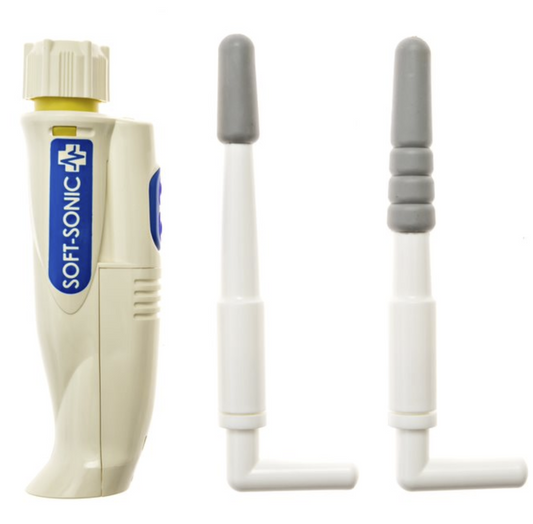
For consistent and safe results, specially designed prostate massagers provide controlled stimulation, lower the risk of injury, and allow regular use without a partner or clinician.

Take Control of Your Prostate Health at Home
The Sonic Prostate Massager from Prostate Health Store offers more than simple comfort. It’s a professional-grade device designed specifically for prostate care.
Developed with input from specialists including Dr. J. Curtis, MD and Dr. V. Skrypnyk, it combines expert-backed design with user-friendly features to support gentle, effective prostate stimulation.
Key benefits include:
- Sonic Vibrations to help relieve congestion and improve urinary flow
- Medical-Grade Materials for safety, durability, and peace of mind
- Water-Resistant Design for easy cleaning and versatile use
- Quiet Operation for discretion during use
-
Durable Construction to ensure long-term reliability
Order your Sonic Prostate Massager from Prostate Health Store for safe and effective prostate care at home. We also offer a range of other products designed to promote prostate wellness and overall male health.