How to Tell If Your Pelvic Floor Is Tight or Weak: Signs, Self-Tests & What to Do
Most men don’t think about their pelvic floor until problems appear, like urine leaks or ongoing pelvic pain. These issues signal trouble in the muscles that control bladder function, support sexual health, and stabilize your core.
Studies show that about 16% of men experience pelvic floor dysfunction, yet few know whether it’s from tight or weak muscles. That difference matters, since using the wrong fix can make symptoms worse.
This guide explains the signs, simple self-tests, and steps to help you find the right approach.
Understanding Pelvic Floor Muscle Function

Your pelvic floor is a hammock-like layer of muscles stretching from your pubic bone to your tailbone. The main players include the levator ani and pubococcygeus muscles, which work together as a coordinated unit.
These muscles support your bladder, bowel, and reproductive organs; control when you empty your bladder and bowels; and contribute to sexual sensation and function. They also coordinate with your diaphragm during breathing and help stabilize your spine.
A tight (hypertonic) pelvic floor means the muscles are chronically clenched and can't relax properly. On the flip side, a weak (hypotonic) pelvic floor lacks adequate strength and tone.
However, dysfunction isn't always one extreme—sometimes it's about poor coordination or having both issues in different areas simultaneously.
Signs & Symptoms of a Tight (Hypertonic) Pelvic Floor
Recognizing tightness starts with paying attention to specific patterns your body creates. A tight pelvic floor creates problems precisely because the muscles won't let go, and this manifests in distinct ways.
Primary Symptoms
- Unexplained pain in the pelvis, tailbone, or lower back
- Trouble starting urination
- Frequent or urgent need to urinate
- Feeling like the bladder doesn’t empty completely
- Chronic constipation
- Straining during bowel movements
- Feeling of incomplete bowel emptying
- Pain during sex
- Burning or irritation in the pelvic area
- Reduced sexual arousal
Secondary / Overlapping Clues
- Hips that stay stiff even after stretching
- Habitual jaw clenching or teeth grinding
- Constantly tense or guarded posture
- Frequent urinary tract infections (UTIs)
- Persistent pelvic tightness or tension that won’t relax
Why These Symptoms Occur
Overactive muscle tone prevents proper relaxation and coordination. As a result, the muscles develop trigger points and go into spasm. This creates a vicious feedback loop where pain triggers guarding, which increases tightness, which in turn causes more pain.
Signs & Symptoms of a Weak (Hypotonic) Pelvic Floor
In contrast to tightness, weakness shows up through loss of control and support. While tight muscles won't release, weak muscles simply can't engage when you need them.
Primary Symptoms
- Leaking urine when coughing, sneezing, laughing, or lifting something heavy
- Involuntary leaks of urine, stool, or gas
- Feeling of pelvic heaviness or organs “dropping” (prolapse sensation)
- Leakage when abdominal pressure increases
- Reduced sexual sensation, difficulty reaching orgasm, or vaginal looseness
Secondary / Overlapping Clues
- Difficulty feeling or activating pelvic floor muscles during Kegels
- Overuse of glutes, inner thighs, or abs to compensate
- Poor posture, weak core stability, or back pain
Why These Symptoms Occur
The muscles lose thickness and mass over time. Meanwhile, neuromuscular coordination declines, meaning the muscles don't fire at the right time or with appropriate intensity. Additionally, connective tissue becomes lax, which allows organs to begin descending.
How to Test at Home if Your Pelvic Floor Is Tight or Weak
Before diving into self-tests, understand their limitations. If you're experiencing pain, prolapse symptoms, or severe leakage, consult a pelvic floor physical therapist for proper assessment.
External / Surface Tests
Start with observations that require no special technique. Jump up and down, cough forcefully, or do jumping jacks. Do you leak? That suggests weakness.
On the other hand, notice whether you have a constant urge to urinate or feel like you can't fully empty your bladder—these point toward tightness.
Kegel / Contraction Test ("Lift & Hold")
Sit up straight with good posture. Contract your pelvic floor as if stopping urine flow mid-stream. What should you observe? Can you create a distinct lift and squeeze? Can you hold it for 5-10 seconds? Most importantly, can you fully relax the muscles afterward?
If you can barely feel anything or create only a weak flutter, weakness is likely. Conversely, if you feel constant tension, can't relax between contractions, or experience discomfort, tightness may be the issue.
Internal Self-Assessment
For those comfortable with it, use a clean, lubricated finger inserted vaginally or rectally. Tight muscles feel like a firm grip that doesn't release. Weak muscles feel soft with little resistance and minimal response to contraction attempts.
Sometimes results are ambiguous. You might find signs of both conditions or symptoms that don't fit neatly. Mixed presentations are common, especially when dysfunction has persisted without intervention.
Causes & Risk Factors of Pelvic Floor Tightness and Weakness
Understanding what caused your dysfunction helps prevent recurrence and guides your recovery approach. Let's break down what typically leads to each condition.
Common causes of tightness
- Overtraining / too many Kegels without release
- Chronic straining (constipation), poor toileting habits
- Trauma, surgery, scar tissue
- Stress, anxiety, guard patterns
- Poor breathing / diaphragm dysfunction
Common causes of weakness
- Pregnancy, childbirth, multiple deliveries
- Aging, menopause, hormonal changes
- Chronic overload (heavy lifting, chronic cough)
- Connective tissue disorders
- Sedentary lifestyle, obesity
Overlap and Compounding Factors
Tight and weak pelvic floor issues often coexist. You might have chronically tight muscles that have become functionally weak from never working through their full range of motion.
Furthermore, dysfunction in related systems like your core, hips, or lower back inevitably influences your pelvic floor since they all work as an integrated unit.
What to Do if Your Pelvic Floor Is Too Tight or Too Weak
Your next steps depend on whether your pelvic floor is tight or weak, since using the wrong approach can make things worse. Each condition needs a different plan that may include specific exercises, lifestyle changes, and guidance from a professional.
1. If Your Pelvic Floor Is Too Tight (Hypertonic)
A tight pelvic floor means the muscles are constantly clenched or in spasm, which can lead to pain and difficulty with bodily functions.
|
Focus on Relaxation |
This is the most crucial step. You must teach the muscles to relax, not just strengthen. Avoid Kegels until relaxation is achieved. |
|
Diaphragmatic Breathing |
Practice slow, deep belly breathing. This allows the diaphragm and pelvic floor to move in tandem—as you inhale, the pelvic floor lengthens and relaxes; as you exhale, it naturally contracts. |
|
Stretching & Mobility |
Use stretches that target the hips, glutes, and inner thighs, as tension in these areas often contributes to a tight pelvic floor. Excellent poses include Happy Baby, Child's Pose, and Deep Squats. |
|
Myofascial Release |
Gentle external massage or internal release (often performed by a professional) can help relax trigger points and taut bands within the muscles. |
|
Warmth |
Applying a warm compress or taking a warm bath can help reduce muscle spasms and promote blood flow to the area. |
|
Professional Help |
Consult a Pelvic Floor Physical Therapist (PFPT). They can perform an internal assessment to identify tight spots and guide you through techniques like down-training and manual release. |
2. If Your Pelvic Floor Is Too Weak (Hypotonic)
A weak pelvic floor means the muscles lack adequate tone and strength, leading to problems with support and control.
|
Focus on Strengthening |
The primary goal is to build muscle strength, endurance, and coordination. |
|
Proper Kegel Technique |
A Kegel is a conscious contraction of the pelvic floor muscles (the muscles you use to stop the flow of urine or hold back gas). Crucially, ensure you are fully relaxing the muscles between contractions. |
|
Vary Your Contractions |
Practice a mix of contractions: Quick Flicks (fast, strong squeezes for urgency) and Long Holds (sustained contractions for endurance). |
|
Integrate with Movement |
Practice engaging your pelvic floor before and during activities that put strain on it, such as lifting heavy objects, coughing, sneezing, or jumping. This is called "The Knack." |
|
Supportive Exercise |
Build core and hip strength with exercises like bridges, squats, and walking, which provide indirect support to the pelvic floor muscles. |
|
Professional Help |
Consult a Pelvic Floor Physical Therapist (PFPT). They can confirm the weakness and use biofeedback to help you visualize your contractions, ensuring you are engaging the correct muscles. |

When to Seek Professional Help
Regardless of which condition you suspect, professional evaluation is always recommended. Pelvic Floor Physical Therapists are experts in the musculoskeletal system of the pelvis and can diagnose whether your issue is tightness, weakness, or a combination.
They provide personalized treatment plans and ensure you're performing exercises correctly—studies show many people perform Kegels incorrectly when trying them alone. Don't wait until symptoms become severe. Early intervention produces better outcomes.
Frequently Asked Questions
How long until pelvic floor muscles return to normal?
Recovery varies based on severity and consistency. Mild cases often improve within 4-6 weeks, while moderate to severe dysfunction typically requires 3-6 months of dedicated work. Chronic conditions may need a year or more, but daily practice with professional guidance yields the best results.
What does poop look like with pelvic floor dysfunction?
You might notice thin, ribbon-like stools from restricted muscles, hard pellet-like stools from constipation, or signs of incomplete evacuation. Excessive straining is common, and some people need manual support to complete bowel movements.
What happens if pelvic floor dysfunction is untreated?
Symptoms progressively worsen over time. Incontinence increases, prolapse can advance requiring surgery, chronic pain may spread, and sexual function often deteriorates. The psychological impact—anxiety, depression, social isolation—becomes significant as daily activities suffer.
What does a prolapse feel inside?
Most describe heaviness or pressure in the pelvis, like something pushing down or falling out. You might feel a bulge at the vaginal opening that worsens when standing. The dragging sensation typically improves when lying down as gravity no longer works against weakened tissues.
What can I drink to help my pelvic floor?
While no drink fixes dysfunction, proper hydration supports muscle health. Water is best—aim for 6-8 glasses daily to maintain bladder function and prevent constipation. Avoid excessive caffeine and alcohol, which irritate the bladder. Warm lemon water in the morning can help stimulate natural bowel movements.
Strengthen Your Pelvic Floor with the Right Tools
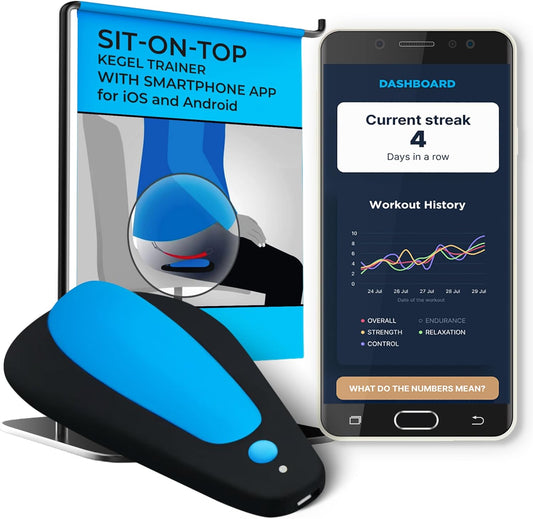
The Kegel Pelvic Floor Muscle Trainer for Men from Prostate Health Store delivers targeted exercise support designed specifically for male anatomy. This highly-rated device offers a practical, effective method for building pelvic floor strength and coordination while ensuring proper technique.
Take control of your pelvic floor wellness today with proven, professional-grade solutions created specifically for men's health and long-term recovery success.
Order now and experience the difference that expert-designed training tools can make.